
Shutters are one of those window dressings that people tend to want once they have seen them in someone else’s home. The appeal is easy to understand — they look considered, they last for years, and they provide a level of light control that curtains and most blinds cannot match. What is less well understood, until you start getting quotes, is that there are two fundamentally different types of shutter installation — and the distinction matters considerably.
Traditional Shutters: What the Name Actually Means
A traditional shutter uses a fixed frame — a Z-frame or L-frame — that is screwed or bonded to the wall, the window surround, or both. The shutter panels hinge from this fixed frame. The result looks built-in because it is: the frame becomes part of the room’s architecture. Removing it later means unscrewing from the wall and making good the plaster.
Installation requires professional fitting, typically two to three hours per window. Lead times from order to installation are usually four to eight weeks. The cost for a professionally measured, manufactured and fitted traditional shutter for a standard window typically runs from £400 to £900.
Perfect Fit Shutters: The Less Familiar Option
A perfect fit shutter uses a clip-in frame — the same system used in perfect fit blinds — that slots into the rubber bead of a uPVC or aluminium window frame. No drilling, no adhesive, no professional fitter required. The frame clips in with hand pressure and releases the same way. Installation takes fifteen minutes per window.
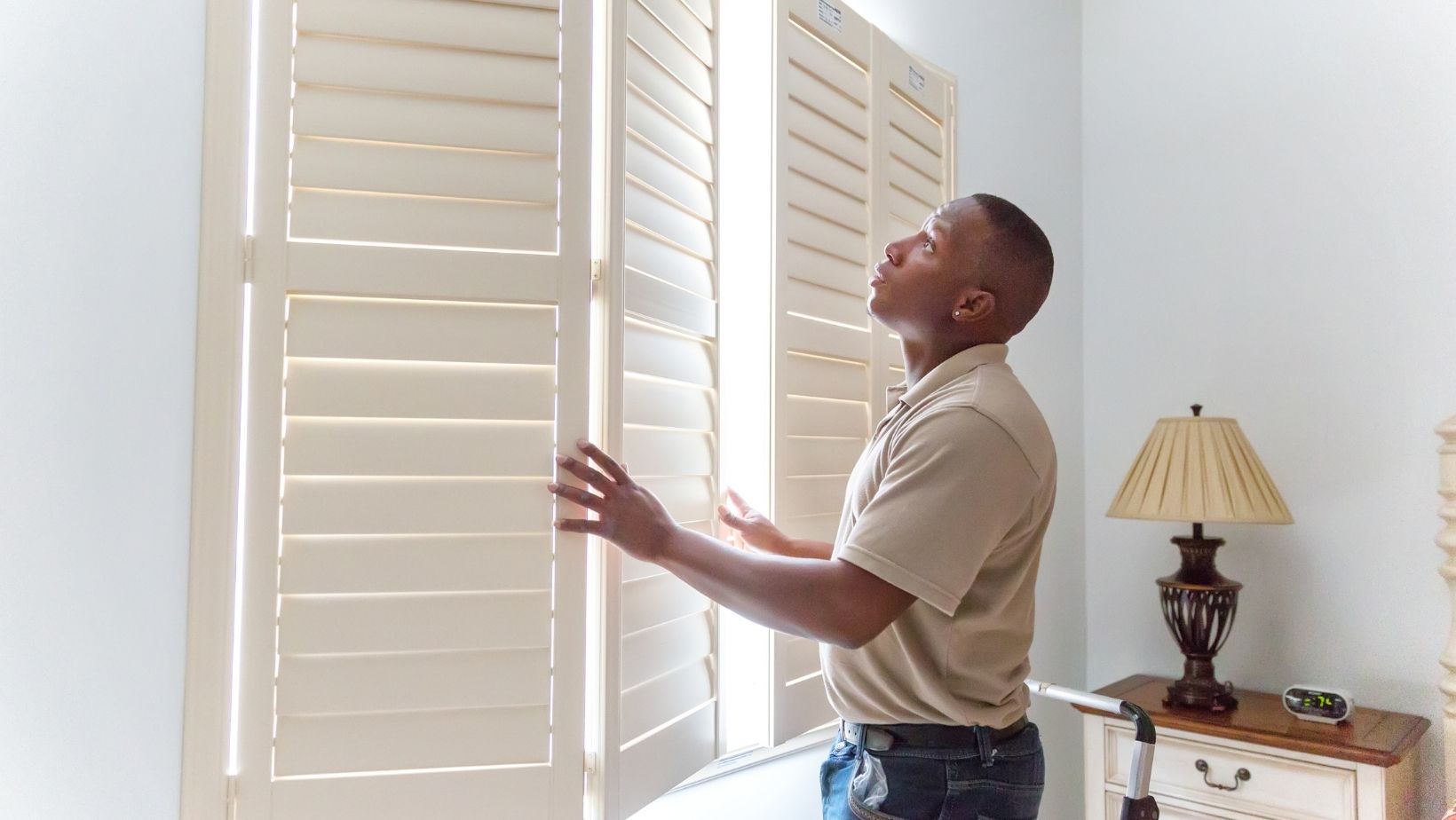
The louvres, panel divisions and finish quality of a perfect fit shutter are visually identical to a traditional shutter from across the room. The operating mechanism is the same. The difference is entirely in how the outer frame is attached.
What Nobody Mentions: The Appearance at the Frame Junction
Traditional shutters, with their wall-fixed frame, create a flush finish where the shutter meets the wall reveal. The junction is typically filled or finished to look architectural — the shutter appears to grow from the reveal rather than sit within the window.
Perfect fit shutters sit within the window bead rather than against the plaster. In a modern uPVC window this is invisible — the bead profile and the shutter frame meet cleanly. In a period property with a deep timber-lined reveal, the difference is slightly more visible. For most UK homes built or refurbished from the 1980s onwards, this distinction is negligible.
The Portability Advantage
Traditional shutters stay with the property. Perfect fit shutters come with you. If you move, the blinds unclip from the window bead and refit in any compatible window in your next home. This portability transforms the cost calculation — the investment in perfect fit blinds and shutters is amortised across multiple properties rather than left behind for the next owner.
For renters in particular, or for anyone who anticipates moving within the next decade, perfect fit shutters represent a way to have the aesthetic of a premium window covering without the permanence — or the deposit risk — of a wall-fixed installation.
Which to Choose
For uPVC or aluminium windows, for rented properties, or for buyers who want the look of shutters without the traditional shutter budget: perfect fit shutters. For period properties with timber frames, deep reveals, or non-standard window geometries where bespoke frame construction is necessary: traditional shutters. The appearance from across the room is the same. The investment, the installation, and the commitment are very different.