
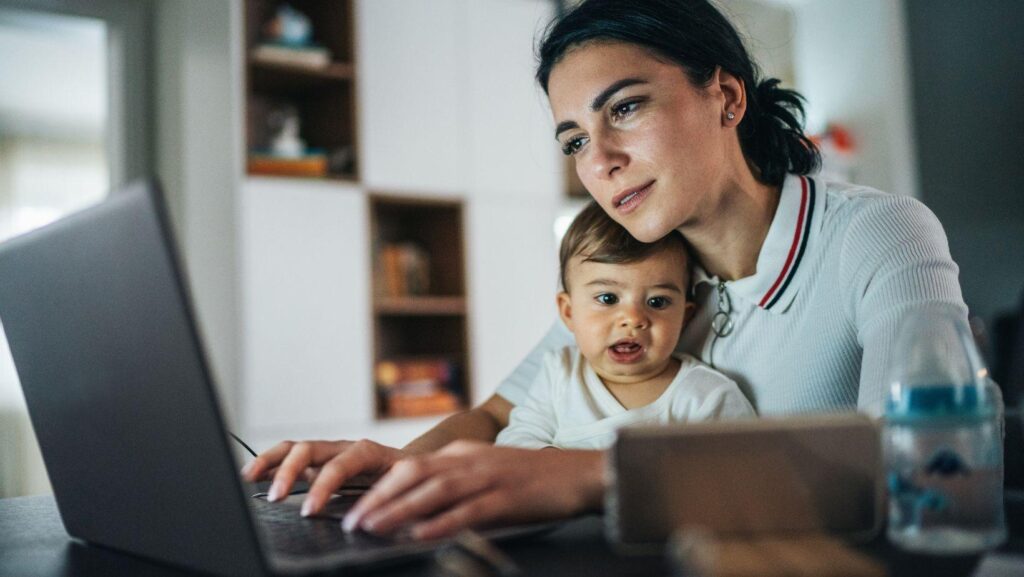
For many mothers, flexible work is no longer a temporary solution between school pickups and bedtime routines. It’s becoming a long-term path toward financial stability, personal fulfillment, and greater control over daily life.
Over the past few years, side gigs have shifted from “extra income” projects into serious business opportunities. Mothers are launching online shops during nap time, managing freelance clients from home offices, and building digital brands from kitchen tables. What once looked like casual gig work is now turning into steady income streams that fit family schedules.
Research supports this shift. According to Upwork’s Freelance Forward 2025 report, freelancers contributed an estimated $1.5 trillion to the U.S. economy, with more than 38% of the workforce participating in freelance work. Flexibility and work-life balance ranked among the top reasons people pursued independent work.
At the same time, mothers continue carrying a large share of caregiving duties. The 2024 report from McKinsey & Company and LeanIn.Org found that women still perform significantly more unpaid household and caregiving responsibilities than men. Flexible work options remain one of the biggest factors in helping mothers stay engaged professionally.
So where are moms finding business opportunities that actually work with family life? And which side gigs have the best chance of growing into sustainable businesses?
Let’s take a closer look.
Why Flexible Businesses Appeal to Mothers
Traditional jobs often come with fixed schedules, commuting time, and limited autonomy. That setup doesn’t always fit the realities of parenting.
Flexible businesses offer something different:
Many mothers also want more ownership over their careers. According to Motherly’s State of Motherhood and Work 2025, a majority of surveyed mothers pursued flexible income opportunities alongside caregiving responsibilities. Financial independence and schedule control ranked among the strongest motivations.
This isn’t about chasing quick cash. Many women are building businesses designed to support their families for years.
Ecommerce Businesses Moms Are Building From Home
Ecommerce remains one of the most accessible business categories for mothers because it can start small and expand over time.
Some moms begin by selling handmade products through Etsy or Shopify. Others focus on curated online boutiques, subscription boxes, or print-on-demand merchandise.
Print-on-demand businesses, in particular, have become popular because they remove the need for inventory storage and large upfront investments. A creator can upload designs, market products online, and outsource fulfillment through providers offering t-shirt printing.
That flexibility matters when your workday includes soccer practice, grocery runs, and helping with homework.
Why Ecommerce Works for Busy Parents
Ecommerce businesses often allow owners to:
Technology has also lowered the barrier to entry. Platforms like Shopify, Canva, Etsy, and AI-powered marketing tools help new entrepreneurs handle branding, customer service, and content creation without needing large teams.
Brand confidence also plays a role. A recent side-gig trends study found that 53% boosted branding confidence helped entrepreneurs feel more prepared to grow their businesses professionally.
For mothers entering business ownership for the first time, feeling confident in presentation and visibility can make a major difference.
Freelancing Is Becoming a Long-Term Career Path
Freelancing used to carry a reputation for instability. Today, many mothers are treating it as a reliable business model.
Writers, virtual assistants, social media managers, graphic designers, bookkeepers, and marketing consultants are finding clients worldwide through remote platforms and referrals.
Unlike traditional employment, freelance businesses can expand gradually. A mother may start with one client while caring for a newborn and later build an agency or consulting practice.
Popular Freelance Services Moms Are Offering
Some of the fastest-growing freelance categories include:
Many of these businesses require little overhead beyond a laptop and internet connection.
Freelancing also creates room for specialization. Moms with backgrounds in education, healthcare, corporate administration, or customer service are often repackaging existing skills into profitable online services.
Creator-Led Businesses Are Opening New Doors
The creator economy has changed how people think about entrepreneurship.
Mothers are building businesses around newsletters, online communities, educational content, digital downloads, affiliate marketing, and coaching programs. Many are monetizing audiences instead of relying solely on client work.
This approach often starts slowly. A parenting blog becomes a membership group. A social media account turns into paid partnerships. A hobby evolves into online courses.
According to the 2025 Creator Economy Report from ConvertKit, newsletters, coaching, and digital products ranked among the fastest-growing independent income streams. Creators with multiple revenue channels also reported stronger long-term income stability.
That diversification matters because it reduces dependence on one platform or one customer.
Common Revenue Streams for Creator Businesses
Mothers building creator-led brands often combine:
This model works especially well for parents because much of the content creation process can happen on flexible schedules.
One afternoon might be dedicated to recording videos. Another evening could involve writing newsletter content after bedtime.
Community-Driven Businesses Are Growing Fast
One of the most interesting trends among women entrepreneurs is the rise of community-centered businesses.
Many mothers don’t just want income. They want connection.
That’s why businesses focused on support, shared experiences, and online communities are seeing strong engagement. Private Facebook groups, paid masterminds, membership forums, and local networking circles are becoming business foundations.
These communities often begin organically through shared parenting experiences.
A mom who shares budgeting tips online may later launch financial coaching services. Another who discusses homeschooling might create educational resources and paid workshops.
The audience relationship becomes part of the business itself.
Remote Work Technology Is Lowering the Barrier to Entry
Starting a business once required office space, expensive software, and large startup budgets.
Now, affordable tools make it possible to operate professionally from home.
Some of the most helpful tools for moms building flexible businesses include:
Communication and Organization Tools
Marketing and Design Tools
Ecommerce and Payment Platforms
Automation tools also help reduce repetitive tasks. Email sequences, social media scheduling, and online booking systems allow business owners to maintain consistency without constantly being online.
For mothers balancing childcare responsibilities, that flexibility can make business ownership more manageable.
How Moms Are Scaling Side Gigs Sustainably
Not every side hustle turns into a sustainable business. The difference often comes down to scalability and structure.
Many successful mom entrepreneurs focus on business models that can grow without demanding endless hours.
Signs a Side Gig Has Long-Term Potential
A business becomes more sustainable when it has:
For example, a freelance writer trading hours for income may later add digital templates, workshops, or courses. A handmade shop owner might expand into wholesale partnerships or licensing.
Growth doesn’t always mean working more. In many cases, it means building smarter systems.
The Emotional Side of Building a Business While Parenting
There’s also an emotional reality behind these businesses that often goes unspoken.
Many mothers are building companies while managing caregiving, emotional labor, school schedules, and household responsibilities simultaneously. Progress may happen in small windows of time.
Some days are productive. Others feel chaotic.
That’s normal.
The appeal of flexible entrepreneurship isn’t perfection. It’s the ability to create work around life instead of constantly competing with it.
Research from the Global Entrepreneurship Monitor 2024–2025 report found that women represent a growing share of entrepreneurs globally, particularly in digital-first businesses and flexible self-employment models.
That momentum reflects changing priorities. Many women are choosing business ownership because it offers greater adaptability during different seasons of family life.
Sustainable Business Models That Fit Flexible Schedules
Not every business requires 60-hour workweeks or large teams. Some of the most sustainable models for mothers prioritize flexibility from the start.
Here are a few examples:
Subscription-Based Businesses
Monthly memberships, subscription boxes, and paid communities create recurring revenue while reducing the pressure of constant sales.
Digital Product Businesses
Templates, ebooks, printables, online courses, and stock photography can continue generating sales after the initial work is completed.
Freelance Agencies
Many freelancers eventually outsource portions of client work and shift into agency management instead of doing everything alone.
Coaching and Consulting
Mothers with experience in parenting, wellness, career development, fitness, or education often build coaching businesses around their expertise.
Print-on-Demand Shops
Merchandise businesses using outsourced production and fulfillment allow entrepreneurs to avoid managing inventory directly.
Conclusion
Flexible side gigs are evolving into something much bigger for many mothers. They’re becoming stable businesses that provide income, freedom, creativity, and greater control over daily schedules.
From ecommerce stores and freelance services to creator-led brands and digital products, mothers are finding ways to build businesses that align with family life rather than compete against it.
Technology has made starting easier. Online communities have made support more accessible. Remote work culture has expanded what’s possible from home.
Most importantly, many moms are proving that sustainable businesses don’t always begin with huge investments or perfect timing. Sometimes they begin during nap schedules, late-night work sessions, or small moments carved out between family responsibilities.
And for many families, those small beginnings are growing into something lasting.